

My Plan To Fix Netflix
Here's what I think they got wrong about viewer drop-off...

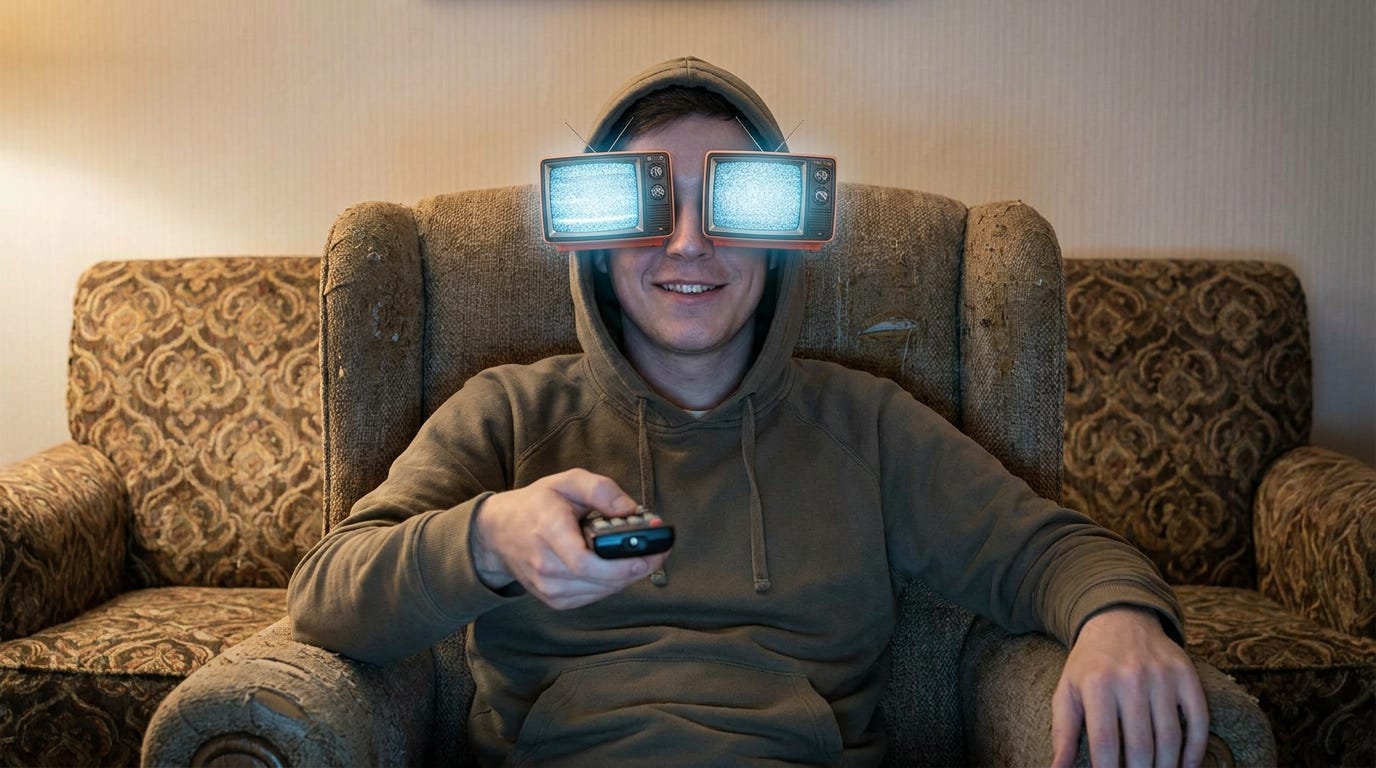
Oh noooo!
Last week, Netflix reported that Beef and Avatar: The Last Airbender lost 59% and 70% of their audiences respectively, between their first and second seasons.
But let me ask you, real quick…
How much free time do you have, these days?
Unless you’re independently wealthy, you’re probably working a side hustle in addition to a full-time job, squeezing in precious time for exercise, or getting some much-needed (but rushed) quality time with friends and family.
God forbid you take a moment to run a bath, write in a journal or read a book, too.
I think we’re watching less TV because we’re realizing passive consumption doesn’t nourish us.
We can’t spare 10 hours every week to lend our consciousness over to the latest binge-worthy franchise.
And more and more of us are realizing that our lives are a sum of the things we give our attention to.
So if we already give 40 hours (or more) every week to our jobs, why would we give even more of our time away to TV?
It’s already a daily fight to give ourselves and our loved ones the attention we want and need.
The older I get, the more I realize attention is devotion, and I have to set boundaries with everything that asks for my energy. So, if Netflix wants my attention, they need to truly give something back.
And I know exactly what it is!
But I have to start with some examples.
On occasion, I’ll dedicate some of my precious time to TV. But it’s for very specific reasons.
Season 2 of Fallout added value to my life because I watched it with my family, and discussions about the meaning of every episode brought us closer.
Season 2 of Stranger Things gave me a reason to hang out with a fun community that watched it in group settings of 10-20 people.
Season 2 of Love, Death and Robots I watched alone, but I recommended it to so many people, and it gave me something to talk passionately about.
Do you see?
Bigger budgets, more celebrities and faster episode drops aren’t the incentives I’m looking for.
When TV is truly valuable, it doesn’t just entertain us, it actually contributes to a communal experience. We are less alone because we consume it, together. We’re not motivated by FOMO, we’re motivated by real connection.
Personally, I gain more from a long walk with my dog than I do watching an episode of most TV shows.
This isn’t because the TV shows are bad or too slow to get released, or any of the other reasons Netflix’s internal analysts mentioned about their viewer drop-off issue.
What I’m saying is, my heart remains open to art, people, TV and experiences that add value to my life.
That’s why, in my opinion…
Netflix is better off investing in fun, catered “watch parties” (no, not just for influencers).
This would create more brand trust and loyalty than serving up the next dish even faster, and hoping that we’re still hungry.
Nourish us, and we will nourish you. Stop asking to take, when you have nothing to truly give. Bring us opportunities for actual connection, and we will give you money.
By the way, this problem doesn’t start or end with TV.
Americans in the 1970s saw about 500 ads per day. Today, it’s estimated that the average person encounters up to 10,000.
We are the most-advertised-to generation in human history, and our brains were not optimized to filter this much information.
We’re not abandoning season 2 of our favorite TV shows intentionally. We’re subconsciously detaching from a toxic relationship.
A lot of us are done giving our time and brainpower to an entity whose singular goal is not to entertain us, showcase incredible stories, or give hardworking creatives, directors and writers a platform to celebrate their films… but simply increase subscriptions.
To address viewer drop-off, Netflix is apparently now implementing 2 big changes:
Faster, 18-month production cycles.
More promotional content to keep audiences engaged between seasons.
To me, this seems less like a real plan that will change how viewers feel, and more like action items that sound productive in a shareholder meeting.